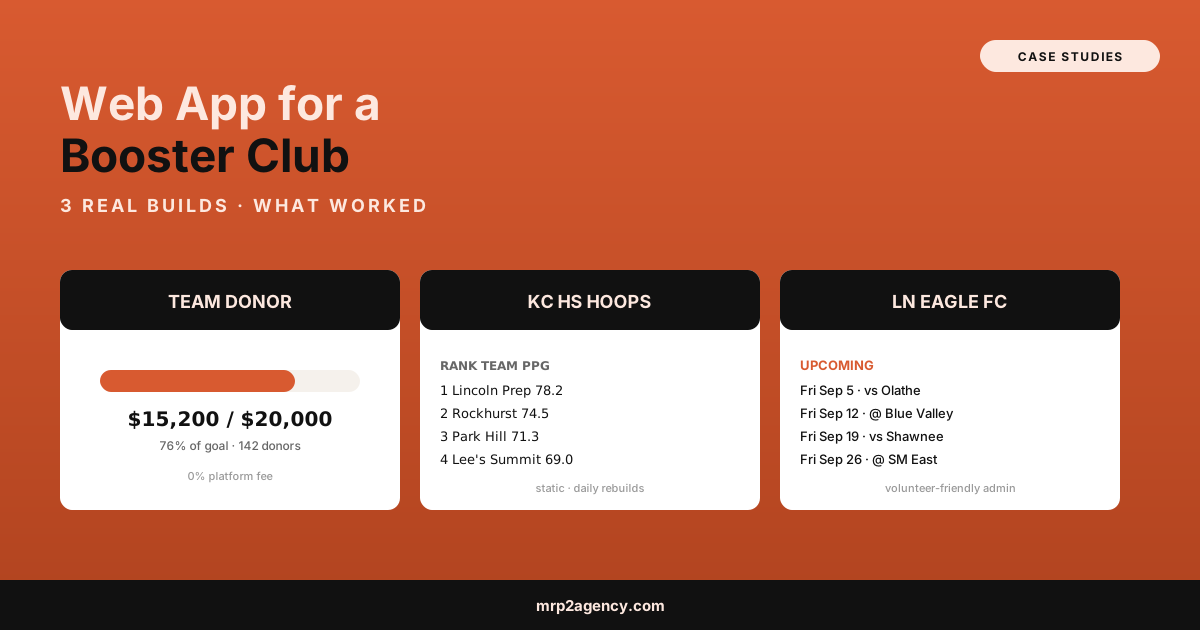
I’ve shipped a web app for booster club projects and athletic-program sites for three different KC-area programs in the last two years. The patterns are remarkably consistent. Here’s what these sites actually need, what they can skip, and what I learned shipping real ones.
What a Web App for a Booster Club Actually Needs
Strip out the marketing-agency proposal language and a booster club or athletic program site needs four things:
- A homepage that explains the program in 30 seconds. Who you are, what you raise money for, and what’s happening this season.
- A donate page that actually works. Not “donate via Venmo, ask the treasurer.” A working payment flow that processes a card and sends a receipt.
- A schedule page that’s current. This is the single most-visited page after the homepage.
- An admin interface a volunteer can update. If updating the schedule requires editing HTML, the site will go stale by week three.
Everything else (alumni pages, sponsor logos, photo galleries) is nice to have. Most programs spend their entire budget on the nice-to-haves and leave the donation flow broken. Don’t be that program.
The Platform Decision Tree
For a typical KC-area program, here’s the realistic decision:
| Situation | Recommendation |
|---|---|
| 5 to 10 page brochure site, no donations | Squarespace, $20/mo |
| Brochure plus simple donation form | Squarespace plus Stripe link, $30/mo |
| Custom donation tracking, sponsorship tiers, fundraising goals | Custom build, $5K to $10K once |
| Full fundraising platform (campaigns, recurring giving, donor accounts) | Custom web app, $15K to $30K once |
Squarespace is fine when there’s nothing to track. Once you’re doing real fundraising operations, the math flips. Custom is cheaper at year three and gives you actual control. The broader page builder vs custom code thread covers the cost math in detail.
Real Build #1: Team Donor
Team Donor is a zero-fee fundraising platform I built specifically for sports teams and schools. The whole pitch is “GoFundMe takes 8% per donation. We take 0%.”
The technical decisions that mattered:
- Stripe Connect for payment processing. Donors pay teams directly. No payment escrow on our end means simpler compliance and faster payouts.
- Custom team pages with their own branding. Each team gets a vanity URL, their colors, their logo, their goal thermometer.
- Volunteer-friendly admin. A team treasurer should be able to log in, update the goal, post a thank-you message, and download donor records without any developer help.
- Mobile-first design. Most fundraising donations come from text messages. The donate flow has to work on a phone screen, fast.
What I’d do differently: I’d add SMS-based donor reminders earlier. The data showed that 30-day follow-ups recover roughly 12% of abandoned donation flows. That’s a feature I delayed by a year and probably shouldn’t have.
Real Build #2: KC HS Hoops
KC HS Hoops is a stats and rankings platform for Kansas City high school basketball. Different problem entirely. The challenge wasn’t fundraising. It was fast, sortable, mobile-friendly stats tables that update during the season.
What worked:
- Static site generation with daily rebuilds. The data only needs to refresh when games happen. A static site is faster than any dynamic stack and costs almost nothing to host.
- Schema markup for athletes and teams. Every player and team page has structured data. Google indexes them as Organization or Person entities, which dramatically improves discoverability when a parent searches “Player Name basketball stats.”
- Aggressive caching for stat pages. Most pages hit the CDN, not the database. Even on tournament day with high traffic, the site stays fast.
What surprised me: SEO was the killer feature, not the stats. Coaches and recruiters searched for specific player names and the site outranked the school’s own pages. That drove adoption faster than any direct marketing.
Real Build #3: LN Eagle Football Club
LN Eagle FC is a more traditional booster club site for a high school football program. No fancy web app, just a clean, fast site that supports fundraising and game-day comms.
The interesting constraints:
- The board rotates every two years. The site has to be maintainable by someone whose only experience with a CMS is updating their Google Calendar.
- Volunteer time is the real budget. Every additional feature is hours someone has to learn, document, and hand off. Simpler is genuinely better here.
- Mobile is everything. Parents check the schedule on phones during practice. Donations come from text-message campaigns. Desktop traffic is rounding error.
The whole site is under 30 pages, hosted statically, with a small admin interface for the schedule and donor wall. Total cost: a fraction of what a Wix site would have cost over the same five-year horizon.
Common Mistakes
A few patterns I see across booster and youth-org sites:
Picking the platform before defining the problem. Don’t start with “we need a Wix site.” Start with “we need to track sponsor commitments and process donations.” The platform falls out of the requirements.
Not specifying who maintains the site after launch. Build is the easy part. Maintenance is where these sites die. Pick a person, document the workflow, and put the calendar reminder in writing.
Underestimating the donation flow. A donation form that drops 40% of completions is invisible to most volunteers because nobody tracks it. Audit your funnel. Stripe and PayPal both give you completion data; look at it.
Building features the board wants but parents won’t use. Photo galleries and alumni pages sound great in board meetings. They get almost no traffic. Build the donate page and the schedule first. Add nice-to-haves only after those work.
If you’re hiring out the build, the same selection criteria from hiring a freelance web developer in Kansas City apply. Most “marketing problems” in nonprofit-land are actually website problems wearing a marketing costume.
What This Means for Your Program
If you’re running or volunteering for a booster club, school program, or youth sports nonprofit, the honest sequence is:
- Fix the donation flow first
- Make the schedule page accurate and current
- Update the homepage to clearly state what the program is and what it raises money for
- Add anything else only after the above three work
That’s the entire roadmap. Most sites I see are trying to skip steps 1 through 3 and build alumni galleries first. It’s backwards.
If you want help thinking through what your program actually needs, tell me about your project. I do this work at nonprofit-friendly rates for KC-area programs because the math usually works out for everyone involved.