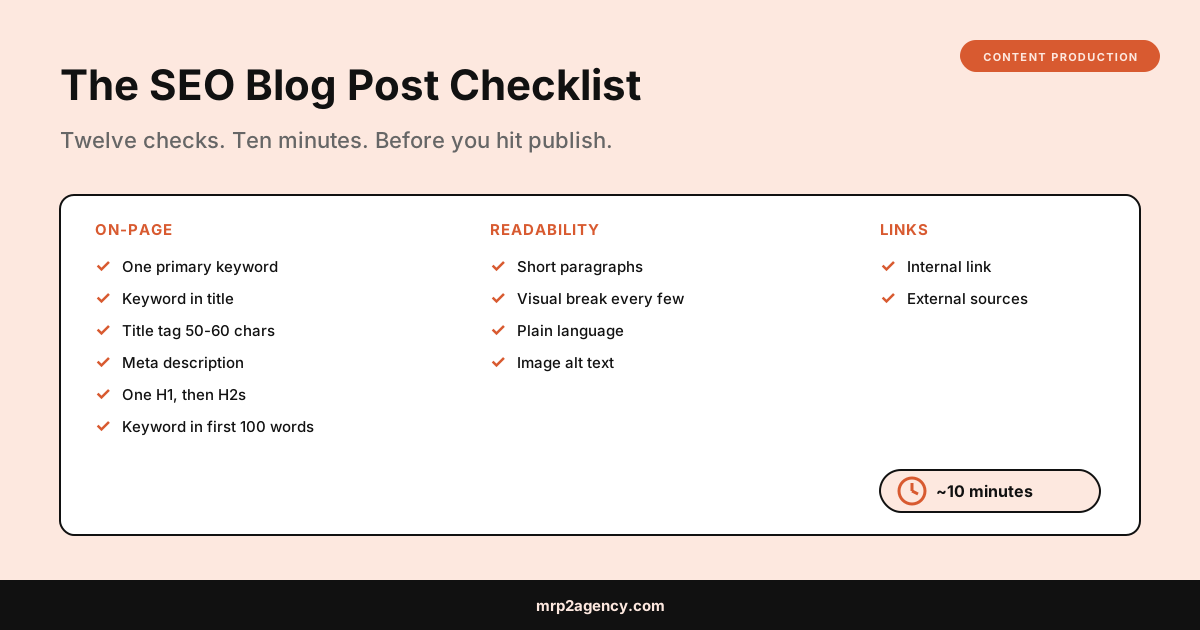
I write and publish a lot of content, so I’ve turned this into muscle memory. Here it is as an actual list you can work through top to bottom before you hit publish, plus the two questions everyone asks: how often to post, and how to keep it going without burning out.
Before You Publish: The On-Page Checks
These are the fundamentals search engines read first. Miss them and the best writing in the world underperforms. If you want the official source behind most of these, Google’s SEO Starter Guide is the canonical reference.
- One clear primary keyword. Every post should target one main phrase and a couple of close variants. If you’re trying to rank for five unrelated things, you’ll rank for none.
- Keyword in the title, naturally. Your main phrase should appear in the post title, ideally near the front, without sounding robotic.
- Title tag 50 to 60 characters. Long enough to be descriptive, short enough that Google doesn’t cut it off in results.
- Meta description that earns the click. 150 to 160 characters written for a human deciding whether to click. It doesn’t directly affect ranking, but it heavily affects click-through.
- One H1, then H2s for structure. One main heading, then section headings that include your keyword or close variants where it fits. This is also what makes a post skimmable.
- Keyword in the first 100 words. Work your main phrase into the opening naturally so both readers and search engines know what the post is about fast.
Readability Checks
Google measures whether people actually read and stay, and its helpful content guidance is explicit that genuinely useful, readable pages are what win. These make that more likely.
- Short paragraphs. Two to four sentences max. Walls of text lose mobile readers instantly.
- A visual break every few paragraphs. A subheading, a list, a table, an image. Something to rest the eye.
- Plain language. Run it through a tool like the Hemingway Editor if you tend toward long sentences. Aim for clear over clever.
- Descriptive image alt text. Every image needs alt text that describes it, both for accessibility and because it’s a small ranking signal.
The voice side of this matters too. If your drafts sound generic or AI-flat, the fixes are in my breakdown of Claude vs ChatGPT for blog writing, where the whole point is producing content that actually sounds like a person.
Link Checks
Links are how search engines understand context and how readers go deeper.
- At least one internal link. Link to another relevant post on your site using descriptive anchor text. This spreads ranking strength and keeps people reading.
- A few external links to real sources. Linking out to authoritative pages signals that your post is well-researched. It doesn’t leak value the way old SEO myths claimed.
Once all twelve are checked, publish. This whole pass genuinely takes about ten minutes once it’s a habit, and it’s the difference between a post that ranks and one that just sits there. It pairs directly with the broader small business SEO checklist, which covers the site-level setup this per-post list assumes is already in place.
How Often Should a Small Business Publish Blog Posts?
This is the question I get most, and the honest answer frustrates people who want a magic number: consistency beats frequency.
One genuinely useful post a month, every month, beats four thin posts one month and nothing for the next three. Google rewards steady, quality publishing, and so do readers who start to expect you.
A realistic cadence for a small business or solo operator:
- Starting out: two to four posts a month while you build a base.
- Maintaining: one to two solid posts a month, indefinitely.
- The floor: at least one post a month so the site never looks abandoned.
Pick a rhythm you can actually sustain for a year, then hold it. The trap is a burst of enthusiasm followed by six months of silence, which reads as a dead site.
How to Scale Blog Content Production
If you want to publish more without it eating your life, the answer is a repeatable system, not more willpower. This is exactly what I help clients build, and what runs this site.
The pieces that make it scale:
- Keep a running idea list. Every question a customer asks is a post. Never start from a blank page.
- Batch the stages. Outline several posts in one sitting, draft in another, edit in another. Context-switching is what actually drains you.
- Use a repeatable structure. A checklist like this one removes decisions. Systematize the boring parts so your energy goes to the writing.
- Use AI as a draft accelerator, then edit hard. It speeds up the parts that aren’t creative, but it never ships unedited.
The full version of building this rhythm from scratch is in how to start a small business blog. The mechanics there plus the per-post checklist here are most of what you need.
Content Marketing for Solo Founders
If you’re a one-person operation, the temptation is to skip content entirely because it feels like a luxury. It isn’t. For a solo founder, a blog is often the cheapest, most durable marketing you have, because a post you write once keeps bringing in people for years.
The key is to be ruthless about scope. You are not a media company. You do not need to publish weekly. You need to answer the real questions your customers ask, one solid post at a time, run each through the checklist above, and stay consistent. That’s a marketing engine one person can actually run.
What This Means for You
If you write your own content, print this list or keep it in a note and run it before every publish. Twelve checks, ten minutes, and your posts stop leaving easy ranking on the table. Then set a publishing cadence you can hold for a year and protect it.
The compounding is real: a post published today with the basics handled keeps working long after you’ve forgotten you wrote it. That’s the whole case for doing this consistently instead of perfectly.
Want help turning your content into a system that runs without eating your week? Tell me about your project and I’ll give you a straight read on what would actually move the needle.